Ease Send is purpose-built rails and interfaces for compliant stablecoin ecosystems in VASP-regulated markets — Kenya among the first. One balance and no gas token for the person paying, a key no one but them holds, and a transaction record built for the regulator who has to sign off on it.
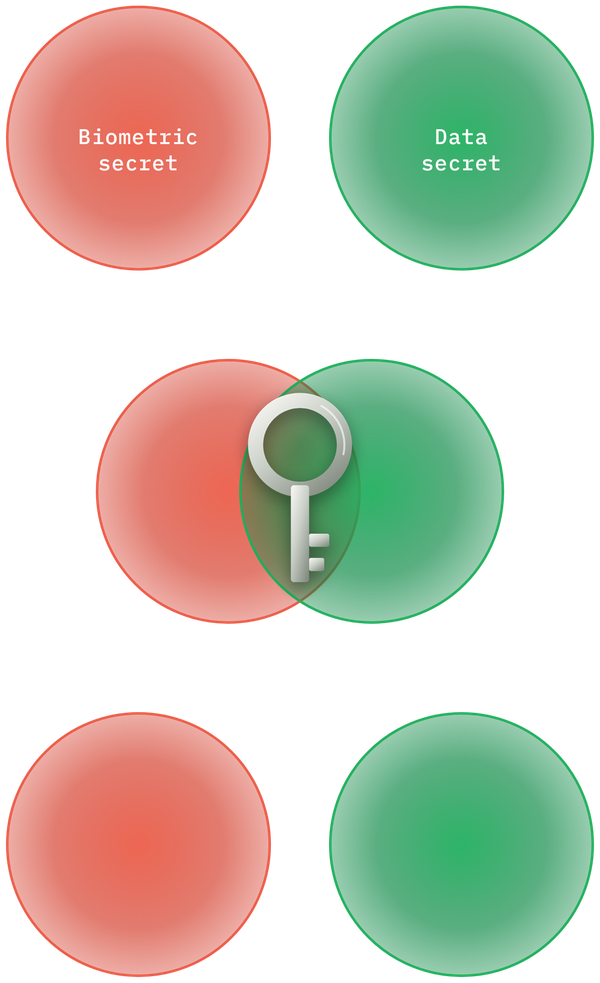
Two secrets meet for an instant to sign a transaction — then vanish. No password, no seed phrase, no one but you.
Existing chains were never built for a bank to ship, or for a regulator to license. Every major network hands a compliance committee the same three objections. Ease Send was engineered around them from the start — not retrofitted to work despite them.
On Ethereum, Tron, Solana, and every EVM derivative, moving a stablecoin means holding a second, volatile token. A customer with 5,000 USDX and no gas can't pay for coffee. Ease Send charges its fee in the same stablecoin — one balance, always spendable.
Seed phrases and browser extensions are an unacceptable support burden for a bank's retail customers — a lost twelve-word phrase is an unrecoverable loss with no chargeback path. Ease Send signs with the biometric sensor already on their phone.
A raw on-chain transfer is a hash and an amount — not a payment message. Nothing maps to the originator, beneficiary, or reference a compliance officer must file. Ease Send writes that record into the protocol itself.
Ease Send settles its network fee in the same stablecoin being transferred. Hold only USDX, and up to 100% of that balance is always spendable — no second token to acquire, hedge, top up, or explain.
Transaction rejected. The customer has money and cannot spend it.
Payment settles. 100% of the balance is always spendable.
No browser extension, no separate signing app. Just the biometric gesture already on their phone — the same one that unlocks it.
The terminal shows a dynamic QR carrying amount, currency, merchant account, and payment reference. Nothing is typed.
A passkey signs the transaction using Face ID or Touch ID — biometric authentication already built into the device.
Payment, processor fee, and network fee execute together. The till receives an encrypted confirmation referencing the request.
The merchant wallet auto-forwards to its bank with account details attached. The bank credits local currency, net of its fee.
Ease Send pairs its wallet with its own end-to-end encrypted messaging system — for discussing a payment, sending a payment request, or notifying someone it's arrived, without leaving the app or trusting a separate one.
Sending a message costs a fraction of what it costs to move money — cheap enough to use for every payment request and notification, not just the important ones.
Attach a receipt, a photo, or a link to an order alongside a payment request. It's a messaging app first, built for payments — not the other way around.
Group messaging is included, so a family coordinating a remittance or friends splitting a bill can talk it through in the same thread the payment happens in.
Messaging runs on Signal's libsignal, hardened against future quantum decryption — the same encryption standard trusted for some of the most sensitive conversations in the world.
This is a different kind of privacy than the transaction ledger's. A payment's structured data is gated — visible to its parties and, as required by law, to regulators. A message about that payment is end-to-end encrypted — visible to no one but the people in the conversation, not even Ease Send.
When an account is created, its master key is generated inside a secure enclave, sealed with a decryption key made from two separate secrets, then deleted. Reconstituting it — even briefly — takes both.
Face ID, Touch ID, or your device's authenticator produces a fresh biometric secret — yours alone, never stored anywhere.
The secure enclave fetches the matching data secret from the cloud key management system. Neither secret can unseal the key by itself.
Only inside the enclave's protected memory, and only for the moment it's needed. No party outside the enclave ever sees a usable key.
The enclave signs the proposed transaction, turning it into a signed transaction ready for the network.
Immediately erased from memory. What remains at rest is the sealed key — useless without both secrets and a live authentication.
Every account also gets a recovery seed phrase, generated alongside the master key and sent to your device in encrypted form — unlocked only with your biometric signature. Most users never touch it.
Lost your device? The seed phrase — written down somewhere secure, off-device, at setup — is what adds a new device or recovers the account. No support ticket. No custodian who can act on your behalf.
Not the cloud provider. Not the device. Not Ease Send. No single party can ever produce a usable key alone.
Ease Send handles the chain, the contracts, and the key infrastructure. You handle the money and the license — the parts only a regulated institution can.
Structured records — institution, account, and reference — travel with every transfer, so reconciliation is a query, not a rebuild.
Full HD wallet support for Bitcoin and Ethereum exists in the architecture — currently disabled while the focus stays on regulated stablecoins.
End-to-end, post-quantum encrypted messaging built on Signal's libsignal — images, links, emoji, and group chats included, at a fraction of a cent per message, paired natively with the wallet.
Demand arrived before the rails did, and regulators across multiple markets are now writing the VASP frameworks that close that gap. Ease Send is built for the frameworks regulators are actually writing — not adapted to fit them after the fact. Kenya's is the most complete so far:
Source: Chainalysis, 2025 Geography of Cryptocurrency Report
VASP regulations emerging across multiple markets require direct, on-demand redemption for every holder and a genuinely gas-free experience — neither is how the major global issuers operate today. Ease Send is built for those frameworks from day one, not adapted to fit them afterward. Kenya's regulations, for example, make this requirement explicit in law.
A crypto token designed to hold a constant value in fiat terms — always $1, for example — backed by an issuer's treasury of at least one dollar in reserve for every token in circulation.
Only you, through your device's passkey. Not Ease Send, not the issuer, not the cloud provider, and not any government — though issuers can freeze an account's ability to send or receive when legally required. Freezing isn't seizure; without your keys, no one can move your funds.
Your recovery seed phrase — generated at setup and meant to be written down somewhere secure, off-device — lets you add a new device or recover the account. No one else can do it for you, and no one else can do it without your consent.
Yes. Multiple issuers can run their own stablecoins on Ease Send, in the same or different currencies, each subject to the relevant VASP regulations and its own KYC/AML process.
Regulators across Sub-Saharan Africa and beyond are actively building VASP frameworks. Kenya's is the most complete so far — a named regulator in the Central Bank of Kenya, a stated capital table, and a direct-redemption requirement gazetted into law — but Nigeria, South Africa, Ghana, and Mauritius are each moving in the same direction, alongside the US GENIUS Act and the EU's MiCA regulation for dollar and euro stablecoins.
No. Kenya is the proving ground because its VASP Regulations are the most complete in the region, but the same rails work for any VASP-regulated market's local currency, and for USD or EUR stablecoins under frameworks like the US GENIUS Act or the EU's MiCA regulation.
Yes — Ease Send is running on a public testnet today. Early testers get hands-on access to the passkey and gasless mechanics, and their feedback feeds directly into what ships before the first bank and switch partners go live. See how to join the beta →
Mobile money proved people want a simple, phone-based way to move money without a bank branch. Ease Send extends that same simplicity with global reach, real-time cross-border settlement, and standing as a licensed, directly redeemable instrument — not just a domestic wallet.
Ease Send never holds funds — it's non-custodial infrastructure. The issuer holds the 1:1 fiat reserve and is legally required to redeem it directly. The keys, the ledger, and the issuer's redemption obligation don't depend on Ease Send continuing to exist.
No. There's no wallet address to copy, no seed phrase to manage day to day, and no gas token to think about. It's built to feel like sending a message: scan, confirm with a fingerprint, done.
Let's talk about what it takes to issue on Ease Send.
Start the conversation